

Skullcap
Herbal Feature Series: Skullcap (Scutellaria lateriflora)

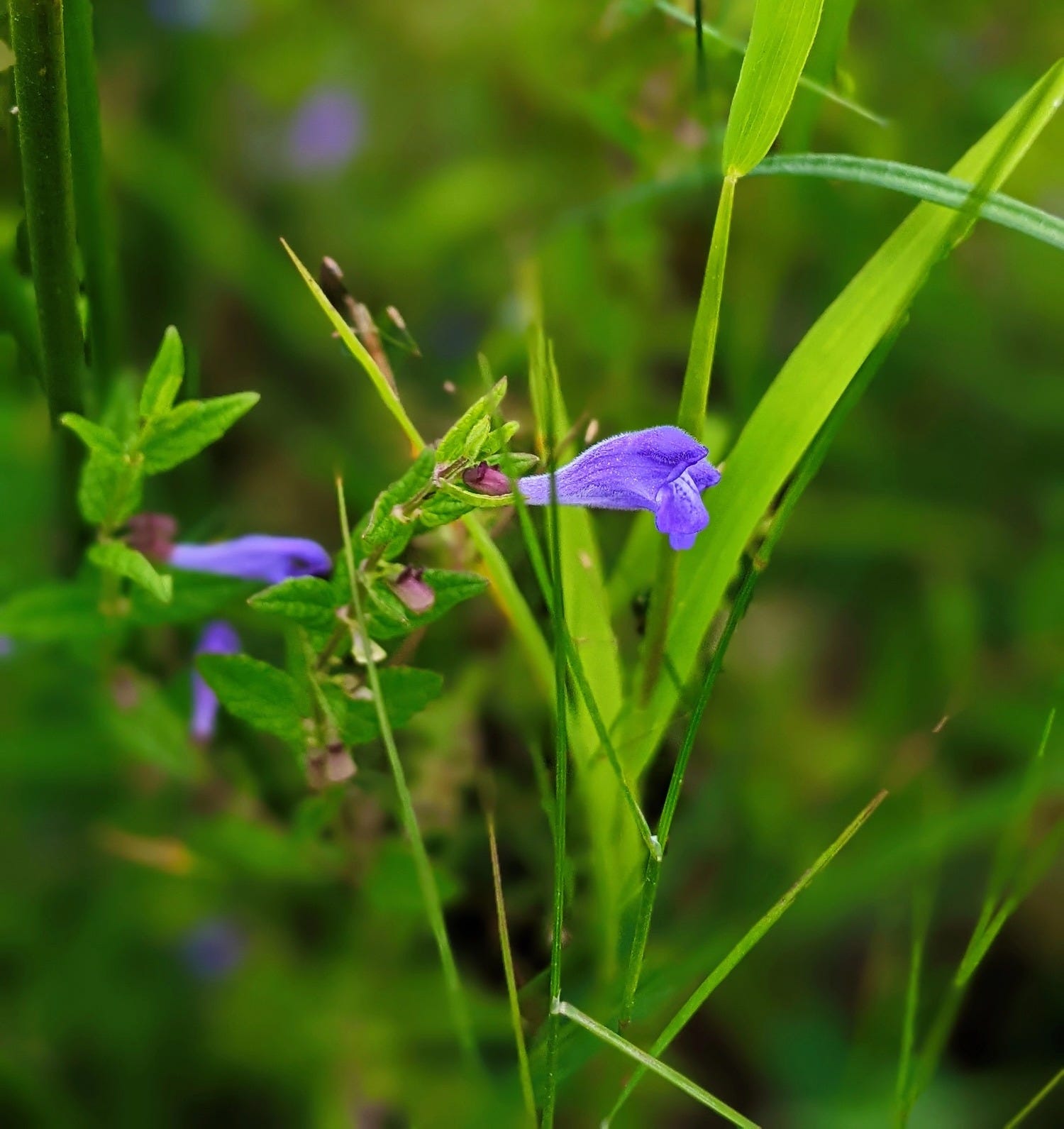
Herbal Feature Series: Skullcap
Each month, I highlight an herb of interest for its nervous‑system‑support and stress-relieving properties. Features in this series include gentle daily allies like chamomile, and linden; restful, sleep‑supportive herbs such as lemon balm, passionflower, valerian, hops, and California poppy; and nourishing nervines like skullcap, milky oats, catnip, lavender, and motherwort.
Alongside this nervine series, I’ll also explore key adaptogens that support the body’s long‑term resilience to stress, such as ashwagandha, rhodiola, and Holy basil.
🌿 🌿 🌿
The phone vibrates on the nightstand. A small reminder of the endless digital demands and constant noise from modern life that never lets the nervous system fully relax. We are always on. Always connected to everyone, everything, and every world event, yet somehow we feel deeply disconnected.
This constant keeps the body in a low, sustained state of vigilance. Over time, the nervous system forgets what true rest feels like. We move through our days so quickly that we don’t notice how far we’ve drifted.
After years of observing how the body responds to prolonged stress, one thing is clear: wellness is not simply the absence of illness. It is the restoration of energy and the ability of the body and mind to return to balance. The nervous system, when supported, can relearn what it means to rest. This is where nature, meaningful connections, and botanicals come in.
Plants like skullcap do not force the body into stillness. They work more subtly, helping to recalibrate a system that has been held in tension for too long.
In the spirit of quiet acts of healing, these botanicals are not a replacement for care, but a return to it.
What are nervines?
Herbalists use the term nervines to describe plants that act on the nervous system, primarily the central nervous system. They fall into three functional categories:
Nervine tonics nourish and restore the nervous system over time. Think of them as deep nutrition for a depleted system: fresh milky oats, gotu kola, skullcap, St. John’s wort.
Nervine relaxants relieve tension and anxiety more acutely: chamomile, lavender, lemon balm, kava, passionflower.
Nervine sedatives act more powerfully on the sleep-wake spectrum: hops, California poppy. Their sedating effect is dose-dependent.
Skullcap sits at the intersection of tonic and relaxant, which is part of what makes it worth understanding.
Think of skullcap as a bridge herb: it can be used in daytime for tension and restlessness, but it also belongs in bedtime blends when the nervous system needs quieting. Compared with lemon balm or chamomile, it is typically a little more focused on nervous exhaustion, spasms, twitching, and that edge-of-the-wire feeling.
The Herbal Feature Series is for paid subscribers and covers safety, clinical evidence, mechanisms of action, indications for use, and preparations. Upgrade to read.